
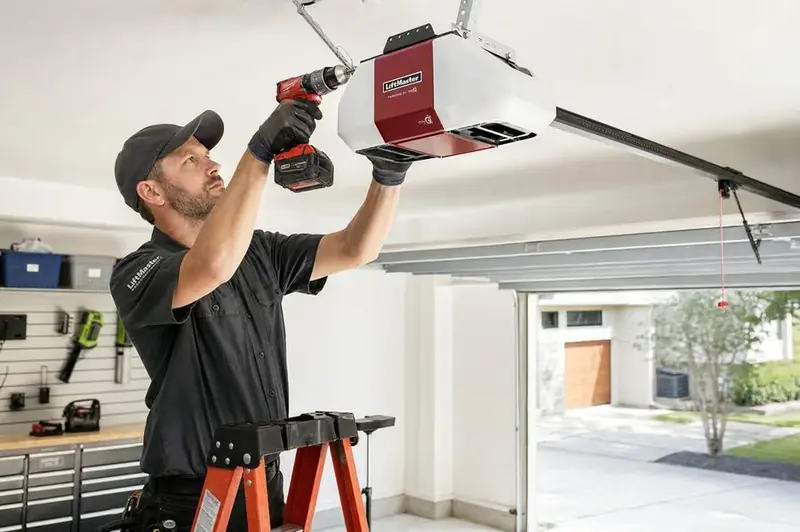
Your garage door opener works hard every single day — often as your family's main entrance. When it starts acting up, the culprit is frequently something you can diagnose (and sometimes fix) yourself in a few minutes. This guide walks Toronto and GTA homeowners through the three problems we're called about most: misbehaving safety sensors, a suddenly noisy belt-drive, and doors that freeze solid in an Ontario winter.
A little routine attention keeps your opener quiet, safe and reliable for 15 years or more. Below are the practical checks and maintenance steps we recommend — plus the clear warning signs that mean it's time to call a technician instead of pushing your luck.
How to Test Your Garage Door Safety Sensors
Every automatic opener made since 1993 has a pair of photo-eye safety sensors — small units mounted about 15 cm (6 inches) off the floor on either side of the door. They project an invisible infrared beam across the opening. If anything breaks that beam while the door is closing, the door must stop and reverse. It's the single most important safety feature on your system, especially in homes with kids or pets, so testing it takes priority.
The two-minute sensor test:
- Check the indicator lights first. With the door open, look at each sensor. One is usually a steady green (the sending eye) and the other a steady amber or red (the receiving eye). Both should be lit and steady. A light that is off, flickering or blinking means the beam is blocked or the sensors are out of alignment.
- Do the broom test. Press the wall button to close the door, then slowly wave a broom handle through the opening near the floor — well clear of the moving door. The door should immediately stop and reverse. If it keeps closing, the safety system is not working and the door should not be used until it's fixed.
- Test the auto-reverse on contact. Lay a flat 2×4 board (or a roll of paper towel) on the floor in the door's path and close the door. When the door touches the object it should reverse. If it keeps pressing down, the force settings need adjustment.
If a sensor test fails, try these fixes in order:
- Gently wipe both lenses with a soft, dry cloth — dust, cobwebs and road-salt film are common beam blockers in GTA garages.
- Clear anything leaning in front of the sensors, including bikes, bins and stacked boxes.
- Re-align the eyes: loosen the wing nut on each bracket, aim them at each other, and tighten once both LEDs glow steady. A bumped sensor is the number-one cause of a door that reverses for no reason.
- Check the sensor wires for pinches, staples or rodent damage along the track.
If the lights still won't stay steady after cleaning and re-aligning, the sensor, the wiring or the logic board may have failed — that's our cue to step in.
Common Belt-Drive Opener Noise Issues
A belt-drive opener is prized for running whisper-quiet — it's the go-to choice for Toronto homes with a bedroom over the garage. So when a quiet unit suddenly gets loud, the noise itself is a diagnostic clue. Here's how to read what your opener is telling you.
Rattling or vibrating
Usually the least serious. Over years of daily cycles, mounting bolts, the rail bracket and the motor-head hardware can work loose and buzz against the framing. Tighten every bolt on the rail, the ceiling brackets and the motor housing. Vibration that travels into the house can also be dampened with rubber isolation pads at the mounting points.
Squeaking or squealing
Almost always a lubrication problem. The belt itself never needs grease, but the rollers, hinges, springs and the trolley all do. Apply a garage-door-specific silicone or lithium spray (never WD-40, which attracts grit) to the rollers, hinges and torsion springs. Wipe the overhead track clean rather than lubricating it.
Grinding or clunking
Take this one seriously. Grinding from the motor head often means a worn drive gear or sprocket, while a clunk when the door starts or stops can be a slipping belt or a worn trolley. A belt that's too loose will jerk and slap; one that's too tight strains the motor. Correct belt tension is a quick adjustment — but internal gear wear needs replacement parts and is best left to a technician.
Motor hums but the door won't move
If you hear the motor running but nothing happens, the trolley may be disengaged (check whether someone pulled the manual-release cord), the belt may have slipped off the sprocket, or the door itself may be jammed or too heavy because of a broken spring. Never keep pressing the button — a straining motor can burn out.
Quick belt-drive noise checklist:
- Tighten all rail, bracket and motor-head bolts
- Lubricate rollers, hinges and springs with silicone or lithium spray
- Inspect the belt for correct tension and any fraying
- Listen to where the noise comes from — track, door or motor head
Winter Maintenance: Prevent Your Opener From Freezing
Toronto winters are hard on garage doors. Freezing rain, salt, slush and swings between mild and −20 °C create the perfect conditions for a door to freeze to the ground or an opener to overwork itself. A few autumn maintenance steps prevent the most common cold-weather failures.
Before the cold sets in:
- Care for the bottom weatherseal. The rubber seal along the base is what freezes to the concrete. Clean it, check for cracks, and wipe on a thin coat of silicone lubricant so water beads off instead of bonding to the floor.
- Lubricate all moving metal. Cold thickens old grease and stiffens dry parts, forcing the opener to pull harder. Spray the rollers, hinges and springs with a silicone or lithium product rated for low temperatures.
- Clear the threshold. Keep ice, snow and slush from building up where the door meets the floor. A rubber threshold seal on the concrete adds an extra barrier against blowing snow.
- Check the sensitivity setting. As parts stiffen in the cold, an opener set too sensitively will reverse partway down. Your manual explains the force and travel adjustment — or we can dial it in during a tune-up.
If the door is already frozen down:
- Do not hammer the opener button repeatedly — that's how motors burn out and gears strip.
- Break the seal at the bottom by hand or with a plastic scraper, or pour warm (not boiling) water along the base and clear it fast before it refreezes.
- Use the manual-release cord to open the door by hand if a light freeze is holding it, rather than straining the motor.
- Once open, wipe the seal dry and apply lubricant so it doesn't grab again the next morning.
When to Call a Professional
Plenty of opener issues have a five-minute homeowner fix. But some symptoms signal a repair that needs the right parts, tools and safety training. Call DPS Garage Doors if you notice any of these:
- Safety sensors that won't stay aligned after cleaning, or a door that won't reverse
- Grinding from the motor head, or a motor that hums without moving the door
- A loud bang followed by a heavy door — a likely broken torsion spring (never a DIY job)
- An opener more than 12–15 years old that's failing repeatedly — often cheaper to replace than to keep repairing
Want the full rundown of the LiftMaster and Chamberlain belt-drive models we install and service across the GTA? See our garage door openers page for smart myQ, battery-backup and Secure View options. And if you'd like a fast checklist for the rest of your door, our winter garage door maintenance checklist covers the whole system.