
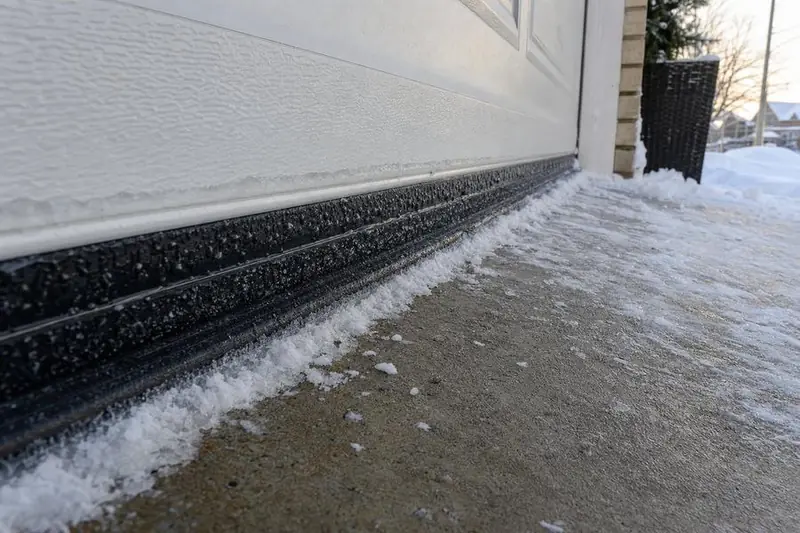
You hit the opener button, hear the motor strain, and the door doesn't budge — the weather seal has frozen solid to the concrete overnight. It's one of the most common GTA winter calls we get, and it's also one of the easiest to make worse by forcing it. Here's the safe way to handle it.
Why this happens
The GTA's freeze-thaw pattern is the perfect setup for this problem. Snow melts slightly during the day, water runs under the bottom of the door and pools against the threshold, then refreens overnight as temperatures drop. The rubber weather seal along the bottom of the door — especially if it's already cracked, thin, or not sitting flush — bonds directly to the ice sheet that forms on the concrete. By morning, the seal is essentially welded to the floor.
This is more common on driveways and garage floors with poor drainage, no slope away from the door, or an aging weather seal that's lost its flexibility (see our weather seal guide for what a healthy seal should look like).
What NOT to do
The instinct is to hit the opener button repeatedly or hold it down, hoping the motor has enough power to break the ice free. Don't. This is exactly how you end up with a much bigger repair bill:
- The opener's gears can strip trying to pull against a frozen anchor point
- The lifting cables can snap under the extra load, which is a genuine safety hazard
- The track can bend if the door lifts unevenly because one side breaks free before the other
- The bottom panel can crack or tear away from the seal if you force it hard enough
If the opener has already tried and failed once and reversed itself or stalled, disconnect the manual release (the red cord hanging from the trolley) before doing anything else — this takes the opener out of the equation entirely while you deal with the ice.
Safe thawing methods
Work from the outside if possible, along the full width of the door where the seal meets the concrete:
- Warm (not boiling) water poured slowly along the seal line will melt the bond without shocking the rubber or concrete with extreme temperature
- A hair dryer or heat gun on low works well for spot-thawing without any water runoff to worry about
- Calcium chloride de-icer is safe for both concrete and rubber seals — avoid rock salt, which can pit concrete and dry out rubber over repeated use
Once the ice has softened, lift the door by hand — evenly, from the centre or with help on both sides — rather than immediately trying the opener again.
Once it's open: inspecting the seal and track for damage
After you've freed the door, check the bottom weather seal for tears, flattening or separation from the panel — a compromised seal will just re-freeze the next cold night. Also visually check both tracks for any bend or misalignment if the door felt like it was fighting you on one side during the thaw.
Preventing it next time
- Replace a cracked, brittle or flattened weather seal before winter (see our winter maintenance checklist)
- Improve drainage grading right at the garage threshold so meltwater doesn't pool against the door
- Consider a heated threshold mat or garage heater if this is a recurring problem
- Clear snow and slush away from the base of the door promptly after storms rather than letting it sit overnight
When to call a professional instead of DIY-ing it
If the door won't budge even after thawing the visible ice, if you hear grinding or popping sounds from the opener, or if a cable looks frayed or slack, stop and call a technician. These are signs of mechanical damage beyond a simple freeze, and continuing to force the door risks turning a seal problem into a full spring or cable replacement. DPS offers Same-day emergency service across the GTA for exactly this kind of winter call.
Why the bottom seal freezes to the concrete in the first place
The rubber weatherstripping along the bottom of a garage door is designed to compress against the concrete floor to block drafts, but that same contact point becomes a trap for meltwater. Snow that melts off a vehicle or off boots during the day pools slightly at the threshold, and when temperatures drop overnight, that thin film of water freezes and bonds the seal directly to the concrete. This is extremely common across the GTA during freeze-thaw cycles, particularly in unheated garages and on driveways with poor drainage slope toward the door.
What NOT to do when a door is frozen shut
- Do not force the opener repeatedly — this strains the motor, gears, and can damage the drive mechanism even if the door eventually breaks free
- Do not use a metal scraper or ice pick directly on the weatherstripping, which tears the rubber seal
- Do not pour hot or boiling water on the seal — the rapid temperature change can crack concrete and doesn't fully clear ice below the surface
- Do not attempt to pry the door up with a crowbar or similar tool, which can bend the bottom panel or damage the track alignment
The safe way to free a frozen door
Start by using a hair dryer or heat gun on a low setting along the seal line to gently melt the ice bond without shocking the concrete or rubber. A plastic scraper or putty knife can help work along the seal once it's softened. For persistent cases, a de-icing product formulated for rubber and concrete (avoiding rock salt, which degrades both concrete and rubber over repeated use) applied along the threshold the evening before can prevent the bond from forming as strongly overnight.
Preventing refreeze after you've broken the door free
Once the door opens, clear any remaining ice or slush from the threshold completely before closing it again, since a partial refreeze the same night is common if moisture is left in place. Applying a fresh, high-quality silicone-based weatherstrip conditioner helps the rubber stay pliable and less prone to sticking in future cold spells — see our weather seal guide for product recommendations and replacement timing.
When a "frozen door" is actually a bigger mechanical issue
If a door remains stuck after the ice is fully cleared, or if it moves partway and then stops, the problem may not be ice at all — a spring under stress from the cold, a bent track, or an opener sensing an obstruction can all mimic a frozen-door symptom. Rather than continuing to force a door that won't budge cleanly, call for a diagnostic visit — repeatedly forcing a door with an underlying mechanical fault often turns a simple fix into an expensive one.
FAQ
Is it safe to pour hot water on a frozen garage door seal?
Use warm water, not boiling — extreme heat can crack cold concrete and shock rubber seals, causing more damage than the ice itself.
Can I use a propane torch to melt the ice faster?
No — open flame near a garage door risks damaging the panel finish, seal and any nearby wiring, and it's a fire hazard around vehicles and stored fuel.
Will this keep happening every winter?
Not if you address the underlying cause — usually a worn seal or poor drainage at the threshold — before the next cold snap.