
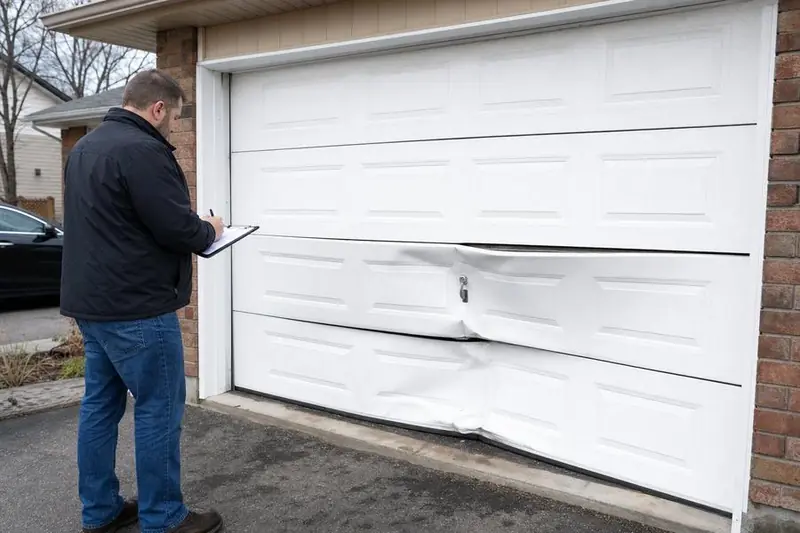
A tree branch through the panel, a delivery truck backing into the track, a break-in attempt that bent the frame — garage door damage happens, and the first question is always the same: will insurance pay for this? The honest answer is "it depends," and the deciding factor is almost always the cause of the damage, not the damage itself.
The short answer: it depends on the cause of damage
Standard Ontario homeowners' policies are built around the concept of "covered perils" — specific, sudden, accidental causes of loss that are named or implied in your policy. Garage doors are generally treated as part of the dwelling (if attached) or as a detached structure (if not), and the door is covered under the same rules as the rest of your home's structure. That means the trigger matters more than the outcome: two identically wrecked doors can have completely different claim outcomes depending on what caused the damage.
Covered scenarios: storms, falling trees, vehicle collisions, vandalism
Most Ontario home policies will cover garage door damage caused by:
- Windstorms and severe weather — a common cause in the GTA during spring and fall storm season
- Falling trees or branches onto the door or the structure around it
- Vehicle impact — whether it's your own car, a family member's, or someone else's vehicle striking the door
- Vandalism or attempted break-in, including forced-entry damage to the panel, track or frame
- Fire, whether it originates in the garage or spreads from elsewhere in the home
According to the Financial Consumer Agency of Canada, home insurance is generally built to cover sudden and accidental damage to your home and property — which is exactly the category most of these scenarios fall into.
Not covered: wear and tear, mechanical failure, poor maintenance
Insurance is not a maintenance plan. Claims are typically denied for:
- A torsion spring that snaps from age and normal cycling (see our broken spring guide)
- An opener motor that burns out after years of use
- Rust, rot or corrosion that develops gradually
- Panels that warp or fade from sun and weather exposure over time
- Damage that resulted from skipping recommended maintenance
Insurers treat these as predictable, gradual costs of ownership — the same category as needing to repaint a fence or replace worn roof shingles.
Attached vs. detached garage — how coverage differs
If your garage is attached to your home, the door is typically covered under your dwelling coverage, the same section that insures your home's structure. If it's a detached garage or coach house, coverage usually falls under "other structures" or "detached private structures" coverage — which is often capped at a percentage (commonly 10–15%) of your total dwelling coverage limit. If you have a detached garage with a premium door or expensive equipment inside, it's worth confirming this sub-limit is high enough with your broker.
Should you actually file a claim? (deductible math)
Before filing, do the math. Many Ontario home policies carry a deductible that is higher than the cost of a typical garage door repair. Garage door panel damage often runs in a similar range depending on the door — see our GTA cost guide for typical repair and replacement pricing. If the repair cost is close to or below your deductible, filing a claim gains you nothing and may still affect your claims history. If the damage is a full-panel replacement, structural frame damage, or a new door entirely, a claim is usually worth pursuing.
What documentation your insurer will want
To support a claim, insurers typically want:
- Clear photos of the damage from multiple angles, taken as soon as possible after the incident
- A written, itemized repair estimate from a licensed garage door company
- A description of exactly what happened and when
- A police report, if the damage involved vandalism, theft or a hit-and-run
How a written repair estimate from DPS helps your claim
DPS provides detailed written estimates that break down parts, labour and the specific cause of damage as observed on-site — exactly the kind of documentation adjusters ask for. If you're dealing with storm damage, a vehicle impact, or an attempted break-in anywhere in the GTA, we can inspect the door, provide same-day emergency securing if needed (see our emergency service guide), and give you paperwork that supports your claim from day one.
Replacement cost vs. actual cash value coverage in Ontario policies
Two different payout structures affect how much you receive for a garage door claim. Replacement cost coverage pays to install a comparable new door without deducting for the door's age, while actual cash value coverage subtracts depreciation, which can significantly reduce a payout on an older door. Most standard Ontario homeowner policies default to replacement cost for dwelling structures, but it's worth confirming this specifically with your insurer, especially on a door that's more than 10-15 years old.
GTA-specific causes: theft, vandalism and break-ins
Toronto and GTA homeowners occasionally see garage door damage from attempted break-ins or vandalism rather than weather or accidents — a forced or pried door, or damage from someone attempting to defeat the opener. This type of damage is typically covered under standard vandalism or theft provisions, and filing a police report alongside your insurance claim is generally required and speeds up processing. If your garage connects to the house, also check whether the incident affects your policy's separate theft-of-contents coverage for anything taken from inside.
Detached garages and laneway structures: separate coverage limits
Detached garages, increasingly common with GTA laneway housing and older properties with rear coach houses, are often covered under a separate "other structures" section of your policy with its own coverage limit, distinct from your main dwelling coverage. This sub-limit is sometimes lower than homeowners expect, and a full door and structural repair on a detached garage could exceed that limit if it hasn't been reviewed in a few years. Confirm this coverage amount is adequate, particularly if your detached garage has increased in value or size since your policy was last updated.
Documentation that speeds up a GTA insurance claim
Claims move faster when they include time-stamped photos of the damage, a police report for any vehicle-impact or vandalism incident, and a professional written estimate that itemizes labour and materials separately. DPS provides free, itemized estimates for GTA homeowners that reflect the format most Ontario adjusters expect, which helps avoid back-and-forth delays during the claims process. Keeping basic maintenance records also helps demonstrate that damage was sudden and accidental rather than the result of long-term neglect, which is often the deciding factor in borderline claims.
FAQ
Will my insurance go up if I file a garage door claim?
It's possible, depending on your insurer and claims history — ask your broker before filing if the repair cost is close to your deductible.
Does insurance cover a garage door opener that stops working?
Generally no, unless the failure was directly caused by a covered peril like a power surge from a lightning strike, which some policies do cover separately.
What if I damaged my own garage door with my car?
This is usually covered under home insurance, not auto insurance, since it's damage to your property rather than a vehicle-to-vehicle collision.