
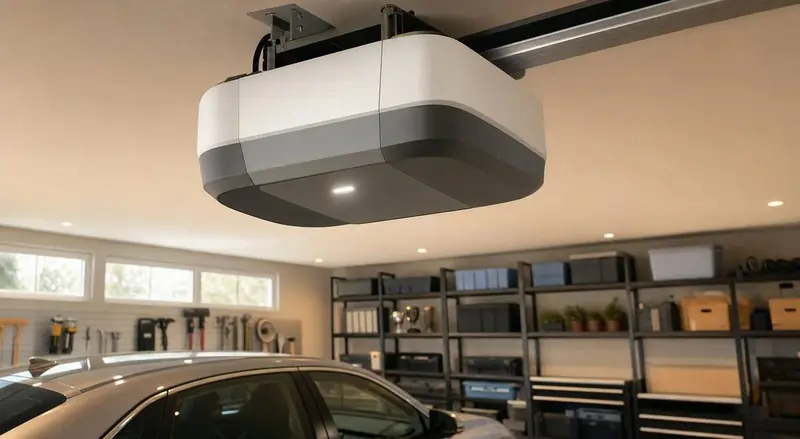
Most homeowners never think about garage door code until something goes wrong — a home inspection flags an old opener, a renovation triggers a permit review, or a child's near-miss with an auto-reverse test makes the safety rules suddenly feel very real. Here's what Ontario actually requires, in plain English.
Which code applies: Ontario Building Code and the national UL 325 standard
Two separate frameworks govern garage doors in Ontario. The Ontario Building Code (O. Reg. 332/12) governs structural aspects of the garage itself — the opening size, fire separation from the house, and energy performance if the space is heated. Layered on top of that is ANSI/CAN/UL 325, the binational safety standard (jointly recognized in Canada and the U.S.) that governs how electric garage door openers must behave, especially around entrapment protection. As of March 2023, UL 325 fully replaced the older CSA C22.2 No. 247 standard in Canada, so any opener sold new today is certified to UL 325, not the legacy CSA standard.
Opener entrapment protection: what's required since 1993
Every residential garage door opener manufactured for sale in North America since 1993 must include entrapment protection — meaning the door must automatically reverse if it contacts an obstruction while closing. Modern openers achieve this through a combination of mechanical force sensing and a photo-eye safety sensor mounted near the floor on both sides of the door. If your opener predates this standard, or if the safety sensors have been removed, disconnected, or are misaligned, the unit is considered a life-safety defect by Ontario building officials — not just a maintenance issue.
Fire and exhaust separation between garage and house
For attached garages, the Ontario Building Code requires a fire and gas-tight separation between the garage and the living space. In practice this means the door between your garage and house interior must be weatherstripped, tight-fitting and fitted with a self-closing device — the code treats vehicle exhaust and potential fire spread as serious enough risks to require this even in single-family homes, where a full fire-rated wall assembly isn't always mandated.
Spring and counterbalance requirements
Code and the UL 325 standard both assume your door is properly counterbalanced by its torsion or extension springs. A worn, corroded or improperly tensioned spring undermines every other safety system on the door — if the door isn't correctly balanced, the opener's force sensing and auto-reverse behaviour can't be relied on to work as designed. If a spring has broken or is visibly stretched, sagging or rusted, the door should be treated as unsafe to operate until it's repaired (see our spring failure guide).
Glass and window safety rules in garage doors
Where a garage door includes glass panels or window lites, Ontario code requires that glazing meet safety glass standards where the glass area is large or positioned low enough to pose an impact risk — similar to the rules that apply to patio doors and other residential glazing. This is worth checking on older doors that may have been fitted with standard (non-safety) glass before current rules applied.
What changes when you renovate or convert a garage
Converting a garage into living space, a home gym, or a workshop changes its code classification. You may need to address insulation, fire separation, electrical, and ventilation requirements that didn't apply when the space was purely a vehicle garage. If you're keeping vehicle access but adding heated, finished space, an upgraded insulated door and possibly a different opener setup (see our insulation guide) are usually part of that renovation.
Signs your existing door or opener is non-compliant
- No visible photo-eye sensors near the floor on either side of the door track
- The door doesn't reverse when it contacts an object (test with a 2x4 laid flat where the door closes)
- Missing or painted-over manufacturer safety labels
- An opener manufactured before 1993 with no documented UL 325 or legacy CSA certification
- Visibly damaged, rusted or mismatched springs
How CSA and UL standards apply to residential garage doors in Ontario
Garage door openers sold in Canada must meet CSA (Canadian Standards Association) safety requirements, which mirror many of the same photo-eye sensor and auto-reverse provisions found in the U.S. UL 325 standard that most manufacturers, including LiftMaster, design to across North America. These standards require openers to reverse automatically if the door contacts an obstruction, and require photo-eye sensors positioned no higher than 6 inches above the floor on both sides of the door opening. Ontario's Building Code references these product standards for new installations, meaning a compliant opener purchased and installed today already meets the baseline federal and provincial safety requirements.
What the Ontario Building Code actually requires for garage doors
The Ontario Building Code addresses garage doors primarily through structural and fire-separation requirements rather than door-specific rules — for example, requirements around the fire rating of the wall and door assembly separating an attached garage from living space, and wind load requirements for the door structure itself in applicable zones. For most repair and like-for-like replacement work, these code provisions were already satisfied at original construction and don't require re-certification, but a full structural change to the opening (widening it, for instance) can trigger a permit review under the Ontario Building Code Regulation.
Photo-eye sensor requirements and why they're non-negotiable
Photo-eye safety sensors are required on all residential garage door openers manufactured after 1993 in North America, and functioning sensors are what allow a door to stop and reverse if a person, pet, or object is in its path. Retrofitting sensors onto an older opener that predates this requirement is not just a code matter — it's a fundamental safety upgrade, and DPS will not complete an opener installation or major repair without verifying functional sensors are in place.
Permit requirements for GTA municipalities
Most garage door repairs and straightforward like-for-like replacements do not require a building permit anywhere in the GTA, since they don't alter the structural opening or fire separation. However, resizing an opening, converting a garage to living space, or any structural modification to the header or surrounding wall typically does require a permit through your local municipality — Toronto, Mississauga, Vaughan, Brampton and the surrounding cities each administer this through their own building department, so check locally before starting structural work.
What happens during a professional safety compliance check
When DPS services a door or opener anywhere in the GTA, our technicians verify photo-eye sensor alignment and function, auto-reverse response, spring tension and balance, and cable/track condition as a standard part of the visit — not as a separate add-on. This matters because a door that opens and closes normally can still have a safety-relevant fault, like a slightly misaligned sensor, that isn't obvious without a dedicated check.
FAQ
Do I need a permit to replace my garage door in Ontario?
Simple like-for-like replacement typically doesn't require a permit, but structural changes to the opening, or converting the garage's use, usually do — check with your local municipality.
Is my old chain-drive opener from the 1980s illegal to use?
It's not automatically illegal to keep using an older opener, but if it lacks entrapment protection it doesn't meet current safety standards and poses a real risk — most professionals recommend replacement rather than repair on pre-1993 units.
Who enforces these requirements — the city or the manufacturer?
Both. The Ontario Building Code is enforced by municipal building departments, while UL 325 compliance is a product certification standard enforced through what manufacturers are legally allowed to sell as new equipment.