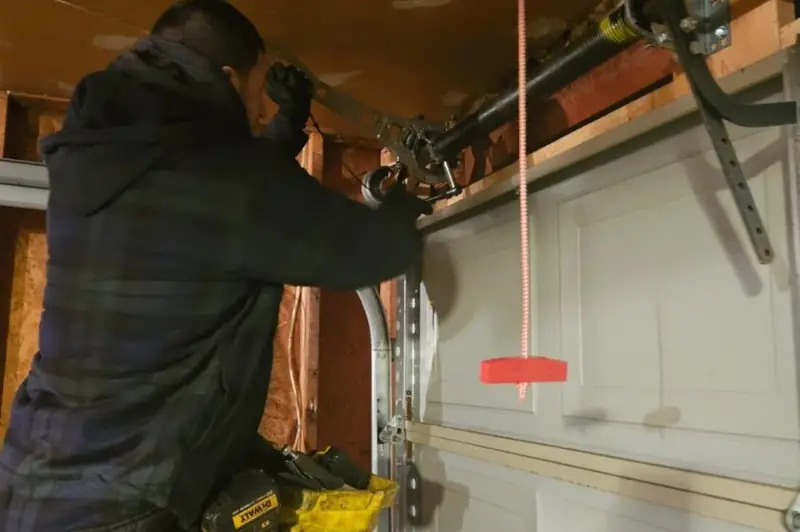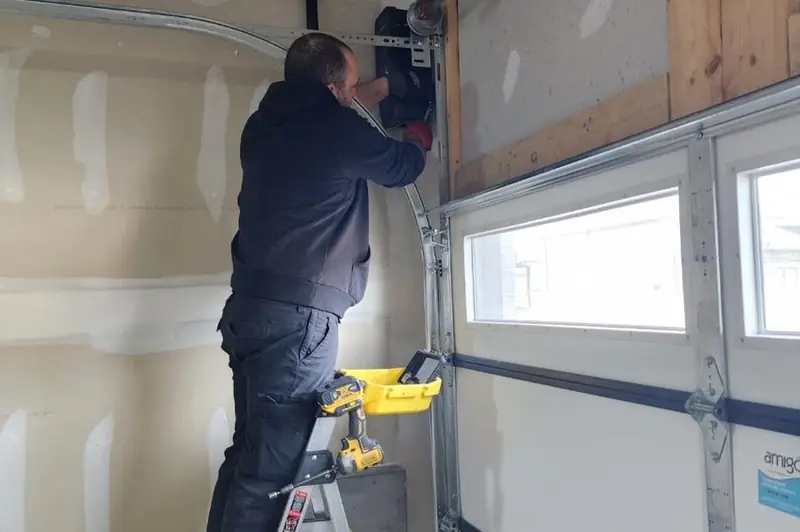
A garage door that grinds or bangs every morning is more than annoying — in a lot of GTA homes the garage sits right under a bedroom, so every noise travels. The good news: most noise comes from a few parts, and the sound itself usually tells you which one.
Match the noise to the cause
- High squeak as the door moves: dry hinges or rollers, or worn roller bearings.
- Grinding: metal rollers that have lost their bearings, or rollers rubbing a bent track.
- Rattle or vibration: loose hinge and bracket bolts, often worse after a winter of temperature swings.
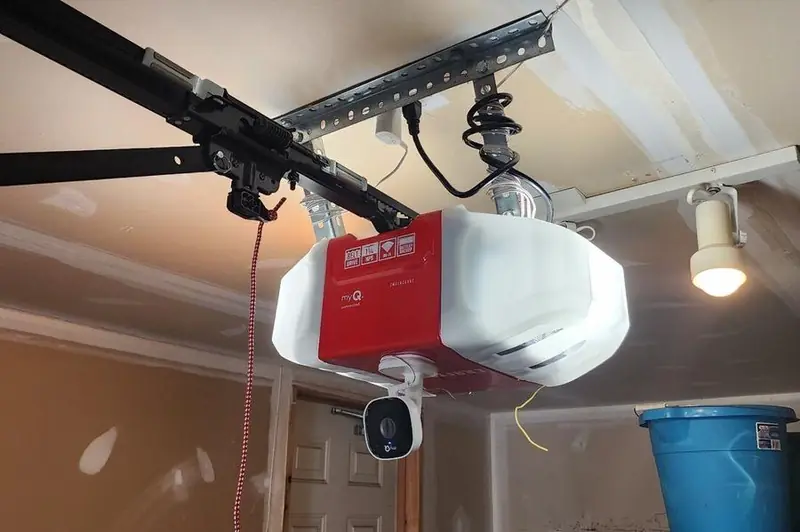
- Loud rumble from the ceiling: an older chain-drive opener.
- A pop or snap when the door starts moving: a spring that is binding or about to fail — stop and call.
- A bang when the door closes: the door is out of balance or the opener's down limit is set too far.
What you can do yourself
- Lubricate the right parts. Use a garage-door silicone or lithium spray on hinges, roller stems, bearings and the spring coils. Leave the tracks clean and dry.
- Tighten loose hardware. Snug up hinge and track bracket bolts with a socket wrench. Don't touch the red-painted bottom brackets — they hold cable tension.
- Clean the tracks. Wipe out dirt, salt and old grease so the rollers turn instead of slide.
- Check the weatherstripping. A torn bottom seal can slap the floor on every close.
Fixes that need a technician
Replacing rollers next to the bottom brackets, adjusting springs, re-hanging a door that rubs the track and setting opener limits all involve parts under tension or safety settings. Steel rollers with worn bearings are one of the most common noise sources we see; swapping them for sealed nylon rollers makes a big difference. If the opener itself is the loud part, a belt-drive or wall-mount opener is much quieter than an old chain drive — see our garage door opener repair and installation page.
Don't ignore a new noise
A door that suddenly gets louder is often telling you something is wearing out: a spring near the end of its life, a frayed cable or a roller that's about to come out of the track. Catching it early is usually a smaller repair than waiting for it to fail. If you hear popping from the spring or the door looks crooked, read our guide to a broken garage door spring and call before using it again.
Quiet-door tune-up across the GTA
A DPS tune-up covers lubrication, hardware tightening, roller and hinge inspection, spring balance and opener safety tests, with any worn parts quoted in writing before we replace them. We cover Toronto, Vaughan, Markham, Richmond Hill, Mississauga, Brampton and the rest of the GTA. Learn more about our garage door repair in Toronto & the GTA.